

Betadine Ointment
Previous product
Lulifin Cream 50g (Luliconazole)
A$28.00 A$147.00Price range: A$28.00 through A$147.00
Next product
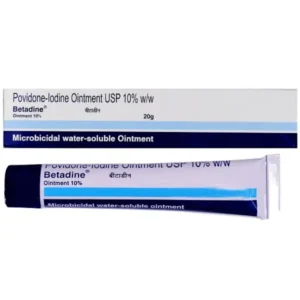
Betadine 10% Ointment
A$28.00 A$96.25Price range: A$28.00 through A$96.25
A$5.60 A$19.60Price range: A$5.60 through A$19.60
In Stock
In Stock
Betadine Ointment
| Pack Size | Price | Quantity | Add To Cart | |
|---|---|---|---|---|
| 1 Ointment | A$5.60 | |||
| 3 Ointment/s | A$11.20 | |||
| 6 Ointment/s | A$19.60 | |||
| Want to order in bulk / B2B price? Send Inquiry | ||||
×
Sorry!! Out of Stock
Sorry! Betadine Ointment is out of stock
Please click below to view other similar medications.
View All Povidone Iodine Products
Offer You Can't Resist
Free Shipping
Enjoy Free Shipping on Orders above AUD304 (USD199)
Estimate Shipping :
07 June - 14 June
20
Last Updated on November 17, 2025

Description
Overview
Betadine Ointment is a topical antiseptic that is formulated with povidone-iodine, extensively used in the prevention of infections from small burns, cuts, or abrasions, as well as skin cuts. The product is recognized by its broad-spectrum antimicrobial effect. Betadine effectively kills bacteria and viruses. It also kills fungi, bacteria, and protozoa. This makes it an ideal choice for Australian homes and in healthcare facilities.
How Betadine Ointment Works
Its active ingredient, povidone-iodine, releases iodine gradually when it is applied to the skin. Iodine gets into the cellular walls of microorganisms by disrupting the nucleic acid structure, causing the destruction of microorganisms. This helps reduce the possibility of infections and facilitates safe, healthy recovery.
Common Uses of Betadine Ointment
- Minor cuts and grazes
- Superficial burns and scalds
- Skin abrasions
- Wound care post-surgery (as recommended by health experts)
- The prevention of infections for minor skin wounds
Application & Dosage Guidelines
| Step | Instructions |
| Clean wound | Cleanse the area with warm water to wash away any debris |
| Dry wound | Cleanse with gauze or a clean, dry cloth |
| Apply ointment | With a clean, dry finger or applicator, apply a thin layer of the dressing over the wound. |
| Cover wound | If necessary, wrap the wound with sterile dressings or a bandage |
| Frequency | Do this 1 – 3 times a day or according to the instructions of a medical doctor or other healthcare professional |
Do not use Betadine on wounds that are large or on burns with severe severity without medical consultation.
Safety and Precautions
- Use with caution. Do not apply if you are allergic to either iodine or povidone-iodine
- Beware of contact with your eyes, ears, or mucous membranes
- It is not recommended to use a needle for puncture wounds, bites from animals, or serious burns without the supervision of a doctor.
- The prolonged use of this product over huge areas of the skin can result in iodine absorption. Consult your GP for advice if you are using it extensively.
- Be sure to keep it out of the Children’s reach
Possible Side Effects
- Mild skin irritation or redness
- Staining that occurs on the skin or textiles (normal and non-harmful)
- Allergy reactions (rare), including itching, rash
- If an allergic reaction or severe irritability is observed, stop using the product and consult a physician
Benefits of Betadine Ointment
- Broad-spectrum antimicrobial action
- It is easy to apply, and it has excellent skin tolerance
- Ideal for first aid at home and for clinical use
- Reduces time to heal by preventing infection
- Cheap and readily available
Storage Instructions
- Keep it below 25°C in a dry area
- Make sure the container is tightly sealed whenever not using it.
- Keep away from direct heat and sunlight
- Discard after expiry date
Frequently Asked Questions (FAQs)
What is Betadine Ointment used for?
It’s an antiseptic lotion to stop infection in minor wounds, burns, cuts, and scratches.
How do I apply Betadine Ointment properly?
The wound must be cleaned first. Dry it and apply a light coating of ointment between 1 to 3 times a days. Dress with a sterile dressing, if needed.
Why is Betadine effective against so many germs?
Since povidone-iodine releases iodine that rapidly kills a wide spectrum of fungi, bacteria, viruses, and protozoa.
Can I use Betadine Ointment on deep or infected wounds?
No, Deep or infected wounds need medical evaluation. Betadine is used for superficial cuts only.
How long should I keep using Betadine on a wound?
Make use of it until the area is healed and does not appear to be infected. This usually takes a couple of days. Any use that is prolonged must be examined by a medical expert.
Is Betadine safe for children?
Yes, when used, it is indicated on small wounds. Make sure it is out of the reach of children to prevent accidental ingestion.
Why does Betadine stain the skin and clothes?
The iodine present in Betadine results in temporary brown staining, but it’s not harmful and disappears when the ointment has been cleaned off and the skin sheds.
Can Betadine be used alongside other wound treatments?
Consult your physician or pharmacist before taking other topical medications in order to avoid interactions.
Is Betadine suitable for people allergic to iodine?
No, if you’ve got an allergy to iodine, stay clear of Betadine and consult your doctor for alternative options.
Why is it important to cover the wound after applying Betadine?
The covering protects the wound from the elements of dirt and bacteria while keeping the ointment in place, which helps aid in the healing process.
Summary Chart: Betadine Ointment Usage at a Glance
| Aspect | Details |
| Active Ingredient | Povidone-iodine (antiseptic) |
| Indications | Minor cuts, burns, abrasions |
| Application Frequency | 1–3 times daily |
| Side Effects | Mild irritation, staining |
| Storage | Keep it below 25°C, keep it dry, and away from direct sunlight |
| Precautions | Do not avoid iodine allergy. Not for deep cuts |
Final Thoughts
Betadine Ointment remains a dependable antiseptic across Australia due to its efficacy for preventing infection of the wound. It is easy to apply and secure; it’s an excellent component of first-aid kits for home use and clinics for medical purposes. Be sure to follow the guidelines for application and get advice from healthcare professionals to treat serious or infected conditions.
Additional Information
| Manufacturer | Win-Medicare Pvt Ltd |
|---|---|
| Pharmaceutical | Ointment |
| Strength | 5% |
| Pack Size | 1 Ointment, 3 Ointment/s, 6 Ointment/s |
Related products





Recently Viewed

Reviews
There are no reviews yet.