
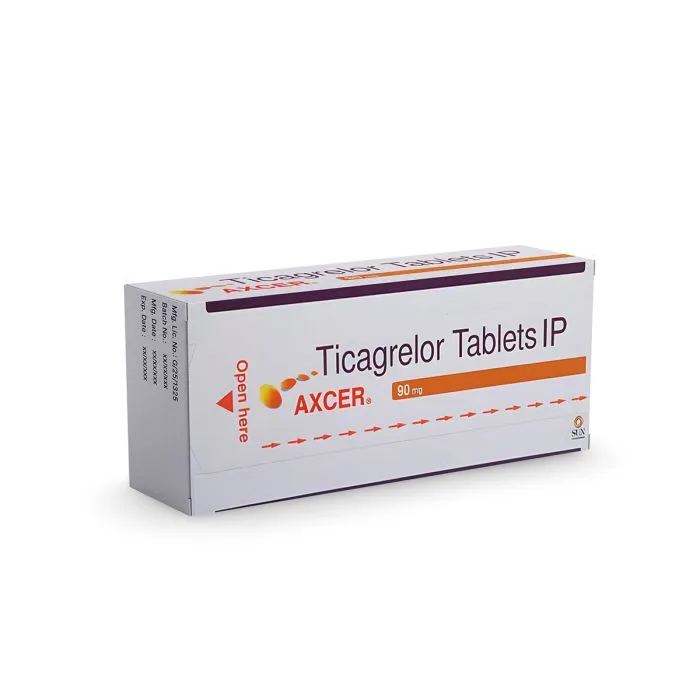
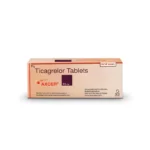
Axcer 90mg (Ticagrelor)
Previous product
Axcer 60mg (Ticagrelor)
A$43.32 A$118.41Price range: A$43.32 through A$118.41
Next product
Levolin synchro breathe Inhaler (Levosalbutamol)
A$57.76 A$187.72Price range: A$57.76 through A$187.72
A$50.54 A$433.20Price range: A$50.54 through A$433.20
In Stock
In Stock
Axcer 90mg (Ticagrelor)
| Pack Size | Price | Quantity | Add To Cart | |
|---|---|---|---|---|
| 28 Tablet/s | A$50.54 | |||
| 56 Tablet/s | A$98.19 | |||
| 84 Tablet/s | A$142.96 | |||
| 180 Tablet/s | A$158.84 | |||
| 360 Tablet/s | A$306.13 | |||
| 540 Tablet/s | A$433.20 | |||
| Want to order in bulk / B2B price? Send Inquiry | ||||
×
Sorry!! Out of Stock
Sorry! Axcer 90mg (Ticagrelor) is out of stock
Please click below to view other similar medications.
View All Ticagrelor Products
Offer You Can't Resist
Free Shipping
Enjoy Free Shipping on Orders above AUD304 (USD199)
Estimate Shipping :
04 September - 11 September
42
Trusted Service
Good experience overall. The team was responsive, the ordering process was simple, and I received clear information about my shipment. Professional service and good customer support.
 Australia
August 16, 2026
Last Updated on November 10, 2025

Description
-
Introduction
Axcer 90 mg is the trademark name used for ticagrelor, a prescription drug known as a P2Y12 antagonist. It’s used to lower the chance of sustaining serious cardiovascular incidents like stroke, heart attack, or death among those who’ve recently experienced a heart-related incident or suffer from a higher risk of one. Axcer is typically employed in conjunction with low-dose aspirin in dual antiplatelet treatment in the aftermath of an acute coronary syndrome (ACS) or percutaneous coronary intervention (PCI).
-
Mechanism of Action
Ticagrelor acts by selectively and irreversibly blocking the P2Y12 part of the ADP receptor in platelets. This receptor plays a crucial part in the activation of platelets as well as the formation of aggregation. By stopping it, ticagrelor decreases the ability of platelets to collide and cause blood clots to form. Contrary to some antiplatelet medications like clopidogrel, for example, ticagrelor does not require activation of the metabolic process; it works more quickly and frequently.
-
Indications
Axcer 90 mg is prescribed to treat these medical ailments:
- Acute Coronary Syndrome (ACS): It includes unstable angina, ST-elevation myocardial injury (STEMI), as well as non-ST-elevation myocardial ischemia (NSTEMI).
- Post-PCI: Patients who are treated with stents typically require two antiplatelet therapies to avoid the formation of clots in the stent.
- Secondary Prevention: For patients who have a history of myocardial injury, Axcer may be continued indefinitely to stop the possibility of recurrence.
- Stroke and Transient Ischemic Attack (in select patients): It can be employed for short periods for those who are at risk of ischemic stroke, but only under the supervision of special guidance from a doctor.
-
Dosage and Administration
The typical dose of Axcer 90 mg is based on this pattern:
- Loading Dose: 180 mg (2 tablets with 90 mg) is typically taken in one dose during the diagnosis of ACS or PCI.
- Maintenance Dose: 90 mg is taken twice every day, about 12 hours apart. This is the recommended dosage for the first twelve months.
- Extended Therapy: Following 12 months of dosage, it could be decreased to 60 mg, twice a day, particularly in patients who are stable and benefit from ongoing protection.
Axcer is usually administered in conjunction with a low aspirin dose (75-100 mg per day) unless contraindicated. The higher dosages of aspirin must be avoided since they could decrease the efficacy of ticagrelor, and also raise the possibility of bleeding.
Administration Tips:
- Taken in combination with or without meals.
- Suck the tablet completely and drink plenty of water.
- Don’t crush, break, or chew the tablets.
-
Duration of Therapy
- If you have a patient with a Stent or ACS, double antiplatelet treatment (ticagrelor plus aspirin) is usually advised for 12 months.
- In certain patients, specifically patients with a high risk of ischemic attack as well as a low risk of bleeding, long-term treatment may be a possibility.
- Before any surgery, the ticagrelor drug is typically taken off 5 to 7 days before surgery to decrease the risk of bleeding.
-
Side Effects
Common Side Effects
- Bleeding: Most frequent side effect. This can include small bleeding (like bleeding from gums or nosebleeds) or more severe bleeding, such as bleeding from the gastrointestinal tract or an internal hemorrhage.
- Shortness of Breath (Dyspnea): Many patients have reported it, generally mild to moderate in severity, and it usually resolves with time.
- Headache, dizziness
- Nausea, indigestion
- Fatigue
- The levels of uric acid are increased (may result in or worsen Gout)
Serious Side Effects
- Major Bleeding: Hemorrhage in the intracranial area, GI bleeding, or bleeding that requires transfusion. Urgent medical attention is necessary.
- Bradycardia or Heart Pauses: The condition can trigger a slower heart rate or pauses, particularly within the first few days of treatment.
- Liver enzyme elevations: It is rare, however, that liver function tests can reveal irregularities.
- Allergic Reactions: Itching, rashes, swelling, and breathing problems.
If unusual or extreme signs appear, like the appearance of bloody stools in urine or vomit, extreme fatigue, or indications of stroke, get medical attention promptly.
-
Contraindications
Axcer (ticagrelor) is not recommended to be employed under the following conditions:
- Active pathological bleeding (e.g., the peptic ulcer bleeding from the brain)
- History of intracranial hemorrhage
- Hepatic impairment severe
- Hypersensitivity is known to ticagrelor, and any one of its constituents
- In the case of breastfeeding and pregnant women, it should be avoided unless it is absolutely required
-
Special Precautions
- Elderly Patients: A higher risk of bleeding; careful monitoring is needed.
- Kidney Impairment: There is no need for dose adjustments in the case of mild or moderate kidney disease. However, it is important to be cautious.
- Liver Disease: It is not recommended for those with liver damage.
- Asthma or Lung Disease: Dyspnea can be aggravated due to ticagrelor, a medication used by some patients.
-
Drug Interactions
Ticagrelor is processed by an enzyme found in the liver called CYP3A4 and may interfere with other drugs. This includes:
Drugs that Increase Ticagrelor Levels:
- A lot of CYP3A4 inhibitors (e.g., ketoconazole, clarithromycin, and ritonavir)
- The juice of grapefruit (should be avoided)
Drugs that Decrease Ticagrelor Levels:
- CYP3A4 stimulators (e.g., the rifampicin molecule or phenytoin; carbamazepine, etc.)
- St. John’s Wort (a natural supplement)
Other Drug Interactions:
- Other anticoagulants (e.g., warfarin, apixaban): Risk of bleeding increases.
- NSAIDs (e.g., ibuprofen, diclofenac): Be cautious due to GI bleeding risks.
- Digoxin: Ticagrelor may increase the levels of digoxin.
The patient should inform the doctor regarding all medications they’re using, which includes over-the-counter medications as well as herbal supplements and vitamins.
-
Monitoring and Follow-Up
Monitoring is vital when you are taking Axcer 90 mg. It is recommended to check the following:
- Signs of bleeding: Check for unusual bruising or bleeding gums, dark stool, or blood in the urine.
- Breathlessness: Be aware of the severity and duration of dyspnea.
- Blood tests:
- Complete blood count (CBC)
- Uric acid levels
- Liver function tests
- Electrocardiogram (ECG): If you suspect bradycardia
The doctor may alter the treatment plan in light of these results.
-
Use in Pregnancy and Breastfeeding
- Pregnancy: Do not recommend unless the benefits outweigh the risks. A good contraceptive method should be employed in the treatment.
- Breastfeeding: It’s not known if it is possible to introduce ticagrelor into the breast milk. Women who breastfeed are typically advised not to use it or stop nursing while taking the medication.
-
Summary Table
| Category | Description |
| Drug Name | Axcer 90 mg |
| Generic | Ticagrelor |
| Class | Antiplatelet (P2Y₁₂ inhibitor) |
| Main Use | Prevention of cardiovascular events |
| Typical Dose | 90 mg twice daily |
| With Aspirin | Yes (75–100 mg daily) |
| Key Side Effects | Bleeding, shortness of breath |
| Serious Risks | Major bleeding, bradycardia |
| Interactions | CYP3A4 drugs, digoxin, NSAIDs |
| Monitoring | Bleeding, blood tests, ECG |
| Contraindications | Bleeding disorders, liver failure |
| Pregnancy/Breastfeeding | Generally avoided unless essential |
-
Conclusion
Axcer 90 mg (ticagrelor) is a potent and rapid-acting antiplatelet medicine that has been proven to decrease the risk of a heart attack, stroke, and even death among high-risk patients. It’s particularly beneficial at the beginning of the time following having a heart attack or after the placement of stents. Although it is highly efficient, it is a process that requires cautious surveillance due to the bleeding danger and possible unwanted adverse side effects. Patients must follow the doctor’s prescriptions to the letter and report any odd signs immediately.
Related products

Reviews
There are no reviews yet.