
What Is Insomnia?
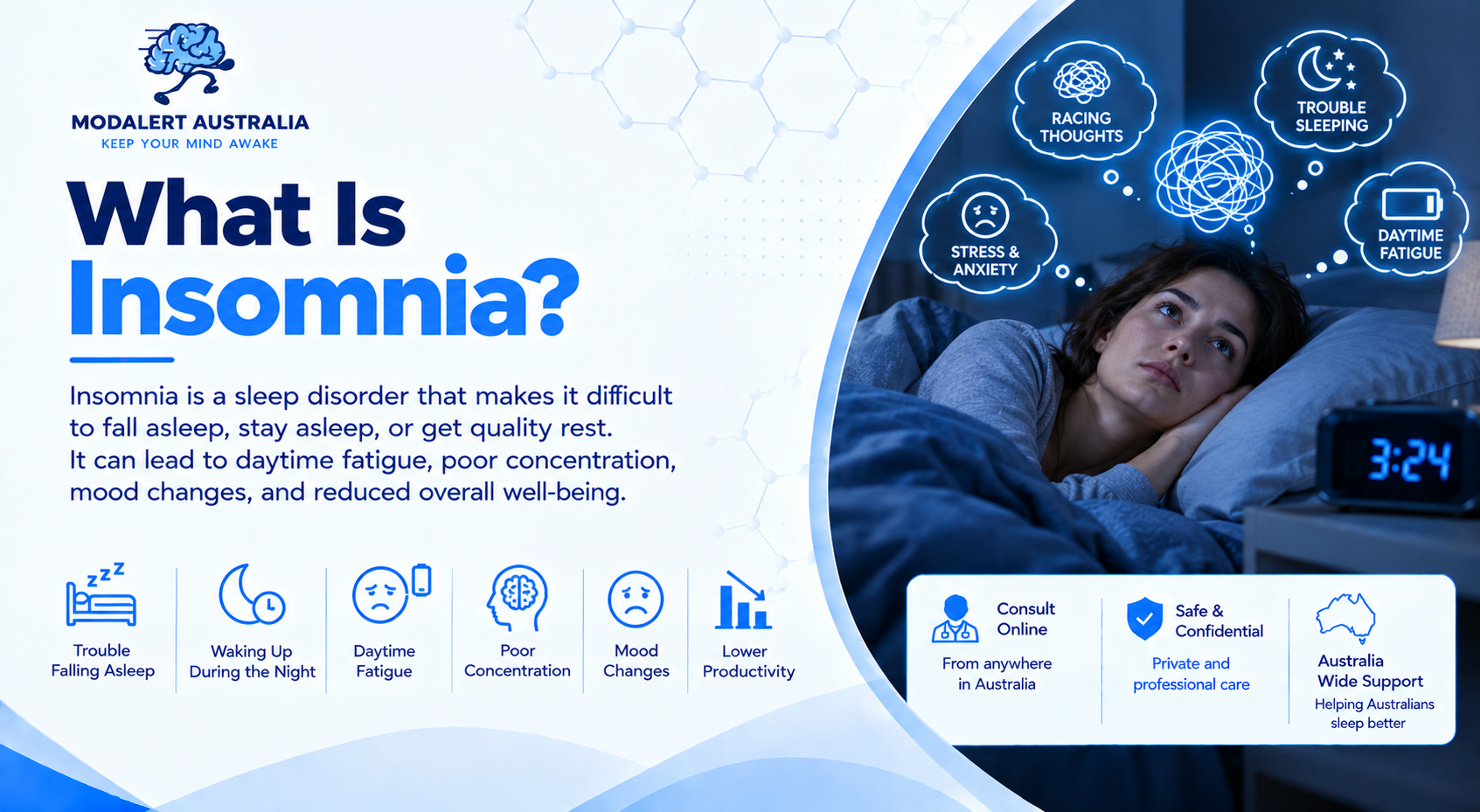
What is Insomnia? Sleep is an essential biological necessity for body health, brain function, and emotional well-being. But millions around the globe suffer from insomnia and sleep disorders, which are characterized by a persistent struggle to fall, remain, or get a restorative state of sleep.
Sleep disorders affect between 10 and 30% of the adult population, with the most severe affecting daily activities, productivity, and living. The comprehensive guide to insomnia explores the issue deeply, providing forms, causes, symptoms, diagnostic options, treatments, and strategies for prevention.
Tossing and Turning All Night? Understanding Insomnia
It’s that familiar feeling of lying in bed, gazing at the ceiling, and counting the days until sunrise. It could be that your mind isn’t shutting off, or you wake up at 3 a.m. and cannot fall asleep. It’s not just an unlucky evening; it could be a sign of sleepiness.
The term “insomnia” means that you constantly struggle to get sleep, even when you can. Sleepy people take longer before falling into a deep sleep. Some wake up early and are unable to return to bed. Some toss and turn throughout the night but never get uneasy sleep.
It’s not about feeling tired following a rough night. The real cause of insomnia is that it can take many months or weeks. It can drain your energy and make you unhappy; it can also affect the health of your body.
Definition of Insomnia
Sleepiness is defined as the continuous difficulty with establishing and maintaining a steady sleep, even though one can sleep at a sufficient rate, and causes impairment during the daytime. It is a condition that can be characterized as affecting the quality of life. Diagnostic and Statistical Manual of Mental Disorders (DSM-5) as well as the International Classification of Sleep Disorders (ICSD-3) define insomnia based on:
- Trouble falling asleep (sleep at the beginning of insomnia)
- Trouble falling asleep (sleep maintenance insomnia)
- Too early to get up (early dawn)
- Sleep that is not regenerative (poor quality of sleep)
To be considered a clinical diagnosis, the symptoms must occur at least three times every week for at least three months and create significant stress or impairment.
Read: How to Sleep Fast in 5 Minutes?
The Many Faces of Insomnia: Types and Variations
It is not all the same. Doctors divide it into various varieties based on how long it lasts, as well as the cause of it.
Short-Term (Acute) Insomnia
- For a few days or even weeks
- Most often, it is triggered by stress – a Job breaking up, loss, or an exam
- It usually goes away after the stress has gone
Long-Term (Chronic) Insomnia
- At least three nights every week for at least three months
- It could be related to medical issues, medication, or sleep issues
- It needs treatment to correct the problem
Sleep-Onset vs. Sleep-Maintenance Insomnia
- Sleep-onset insomnia – Then you lie in bed for hours before eventually drifting off
- Sleep-maintenance insomnia – It is easy to fall asleep, but you get up frequently and struggle to remain asleep
- Early morning awakening – You awake much too early, and you can’t get back to sleep
Secondary Insomnia
The reason for this is an additional issue, such as:
- Chronic discomfort (arthritis or back pain)
- Trouble breathing (asthma and sleep apnea)
- Mental health struggles (anxiety, depression)
Types of Insomnia
Acute vs. Chronic Insomnia
- Acute Insomnia (Short-Term): It lasts several days or weeks. It is usually due to anxiety, travel or other life-related situations.
- Chronic Insomnia (Long-Term): It can last 3 months or more, usually due to mental or medical ailments.
Primary vs. Secondary Insomnia
- Primary Insomnia: Is not directly related to an additional health issue.
- Secondary Insomnia: Medical issues (e.g., asthma, pain, depression) or substance abuse (e.g., coffee and alcohol, caffeine)
Onset vs. Maintenance Insomnia
- Onset Insomnia: It is difficult to fall asleep at first.
- Maintenance Insomnia: Inability to sleep, leading to regular awakenings.
Why Can’t I Sleep? Common Causes of Insomnia
The reason for your inability to get enough sleep is the first stage to fix it. The most likely culprits:
Stress and Anxiety
- Financial stress, work pressure, Relationship problems, money worries
- The brain doesn’t stop, it’s constantly replaying the same thoughts
Poor Sleep Habits
- Your phone is open while you’re at night
- Coffee drinking late into the early morning
- Doing too much chatting in the late afternoon
- Sleeping at various hours each evening
Health Problems
- Chronic pain – Migraines, Backaches, Arthritis
- Breathing issues – Sleep apnea, Asthma, Allergies
- Hormonal changes – Thyroid problems, Menopause
- Digestive troubles – Irritable bowel syndrome, Acid reflux
Medications and Substances
- Stimulants – diet pills, ADHD meds
- Antidepressants – Some SSRIs disrupt sleep
- Blood pressure drugs – The beta-blockers may cause insomnia
- Alcohol – Helps you sleep better, but it reduces the quality of sleep
Mental Health Disorders
- Depression – If you’re sleeping too much, excessively
- Anxiety disorders – The constant worry keeps you awake
- PTSD – Nightmares, hypervigilance, and sleepless nights disrupt sleep.
Signs You Might Have Insomnia (Beyond Just Feeling Tired)
What are the signs to tell whether you’re dealing with insomnia and it’s not an unresolved issue? Check for the following signs:
Nighttime Struggles
- For 30+ mins to sleep most nights
- Waking up several times and trying to find a way to sleep
- Getting up earlier than your alarm and remaining awake
Daytime Problems
- Tired, regardless of how long your bed
- Problems with concentration in school or at work
- The mood swings, irritability, and anger at people
- Falling asleep during the day (in meetings or while driving)
Unhealthy Coping Habits
- Sleeping pills or drinking alcohol for sleep
- All day drinking coffee to keep alert
- Refraining from attending social gatherings because you’re tired
Causes and Risk Factors
Psychological Factors
- Anxiety and Stress (work pressure, financial concerns)
- Depression and Mood Disorders
- Post-Traumatic Stress Disorder (PTSD)
Medical Conditions
- Chronic pain (arthritis or fibromyalgia)
- Neurological Disorders (Parkinson’s, Alzheimer’s)
- Respiratory Problems (asthma or sleep apnea)
- Hormonal imbalances (menopause and thyroid problems)
Lifestyle and Environmental Factors
- Irregular Sleep Schedule (shift work, jet lag)
- Excessive Screen Time (blue light exposure)
- Poor Sleep Environment (noise, light, uncomfortable mattress)
- Substance Use (caffeine, nicotine, alcohol)
Genetic Predisposition
A history of insomnia within the family can increase the risk of developing it.
The Domino Effect: How Insomnia Impacts Your Life
A stormy night’s sleep won’t only leave you feeling tired, but it also impacts your entire existence.
Physical Health Risks
- Weak immune system (getting sicker more frequently)
- A higher risk of suffering from heart disease, as well as high blood pressure
- Gain in weight (sleep loss interferes with the hormones of hunger)
Mental Health Struggles
- Depression and anxiety are the most severe
- Problems with memory and making choices
- Are you feeling emotionally depleted
Work and Social Life
- Less productivity, more errors on the job
- You’re missing out on activities due to exhaustion
- The strained relationships that result from the constant stress of life
Safety Dangers
- The risk of auto accidents is higher due to sleepy driving
- Workplace injuries are more frequent (especially during manual work)
Also Read: 26 Home Remedies for Insomnia
Breaking the Cycle: How Insomnia Is Diagnosed
If your sleep troubles last more than one month, it’s time to consult a physician. This is how doctors determine the cause of insomnia:
Tracking Your Sleep
- Keep a journal of your sleep (write down your bedtime and wake time, as well as the way you felt)
- Utilizing an app for sleep tracking (like an app for a Fitbit or even a smartphone application)
Medical Checkup
- The blood tests (checking the levels of iron and thyroid, as well as hormone levels)
- The review of medications that could disturb sleep
Sleep Study (If Needed)
- Tests for sleep at night in a clinic (for insomnia, restless legs)
- At-home sleep monitors (simpler but less detailed)
From Sleepless Nights to Restful Sleep: Treatment Options
What’s good? It’s possible to treat insomnia. The following are the steps to take:
Cognitive Behavioral Therapy (CBT-I)
- A long-term solution to sleeplessness is to treat it in the long term.
- Teaches you to:
- Refrain from negative thoughts regarding sleep.
- Make sure you have a rigid sleep routine
- You should get up for a while if you’re struggling to fall asleep.
Lifestyle Changes
- Cutting caffeine after noon
- Do not use screens before going to bed
- Keep the bedroom calm, dark, and peaceful
Medications (Short-Term Use Only)
- Over-the-counter (diphenhydramine, melatonin)
- Prescription (Ambien, Lunesta, trazodone)
- Dangers: Dependence, memory fog, or grogginess
Alternative Therapies
- Supplements with Melatonin (helps in resetting sleep cycles)
- Techniques for relaxation (deep breathing and meditation)
- Acupuncture (some consider it to be beneficial)
Symptoms of Insomnia
Short-Term Effects
- Sleepiness and fatigue during the day
- Insufficient concentration and memory problems
- Disorders of the mood (irritability and anxiety)
- Work performance is reduced
Long-Term Consequences
- Greater risk of heart disease
- A weak immune system
- The metabolic disorder and weight gain
- Health decline in the mind (depression and anxiety)
Preventing Insomnia: Habits for Better Sleep
Stopping insomnia before it begins is much easier than repairing the problem in the future. Use these tips:
Set a Sleep Schedule
- Sleep in and wake up around the same time each day (even the weekends)
- Do not sleep to “catch up”-it disrupts your routine
- How To Reset Your Sleep Cycle In One Night
Wind Down Before Bed
- Go through the book (paper and not screen)
- Relax in a warm tub
- Enjoy relaxing music
Fix Your Sleep Environment
- Curtains to block the light
- Earplugs or white noise if it’s getting too loud
- The mattress is comfortable, and the pillows are comfy
Avoid Sleep Sabotagers
- A small meal is not necessary right before bed
- Skip alcohol—it ruins sleep quality
- Do some exercise earlier in the day (not immediately before bed)
Diagnosis of Insomnia
Medical History and Sleep Diary
Monitoring sleeping patterns, habits and signs.
Physical and Psychological Examinations
Eliminating the underlying causes (e.g., thyroid disorders).
Sleep Studies (Polysomnography)
The system monitors brainwaves, heart rate, oxygen levels, and breathing patterns during sleep.
When to See a Doctor about Your Sleep Problems
Some sleep troubles need professional help. Consult a physician if:
- For more than one month
- It’s possible to fall asleep at unintentional times (driving and performing work)
- It is common for you to snore and need to breathe at midnight (a sign of sleep apnea)
- If you feel depressed or hopeless because of sleeping in
Prevention and Lifestyle Adjustments
- Make sure you have a consistent schedule for sleep
- Avoid drinking and consuming caffeine before going to bed
- Optimize bedroom environment (dark, calm, quiet)
- Regularly exercise (but not too close to the time of bed)
Insomnia in Special Populations
- Children/Teens: Sometimes, it is linked with ADHD or anxiety.
- Elderly: The effects of age-related changes in sleep increase the risks.
- Pregnant Women: Hormonal shifts disrupt sleep.
Insomnia Myths vs. Facts: What Works?
Myth: “You can get by on 5 hours of sleep.”
Fact: Most adults require at least 7-9 hours. A shorter time frame can be harmful to your well-being.
Myth: “Alcohol helps you sleep better.”
Fact: The process makes you go to sleep quicker. However, it can ruin the quality of your sleep.
Myth: “Napping makes up for lost sleep.”
Fact: The long naps can make sleepiness even more difficult.
Final Thoughts: You’re Not Alone in the Fight Against Insomnia
The disorder of insomnia is complex, with a variety of contributing causes. The best treatment involves a mixture of behavioural modifications, medical care, and lifestyle changes. Interventions early can help prevent the onset of long-term effects on health and enhance general well-being. A lot of people struggle with insomnia. It is essential not to ignore the issue. Poor sleep can affect your mood, health, and even your life. If you find that changes in your home aren’t enough to aid, consult an expert. It is possible to get better sleep.