
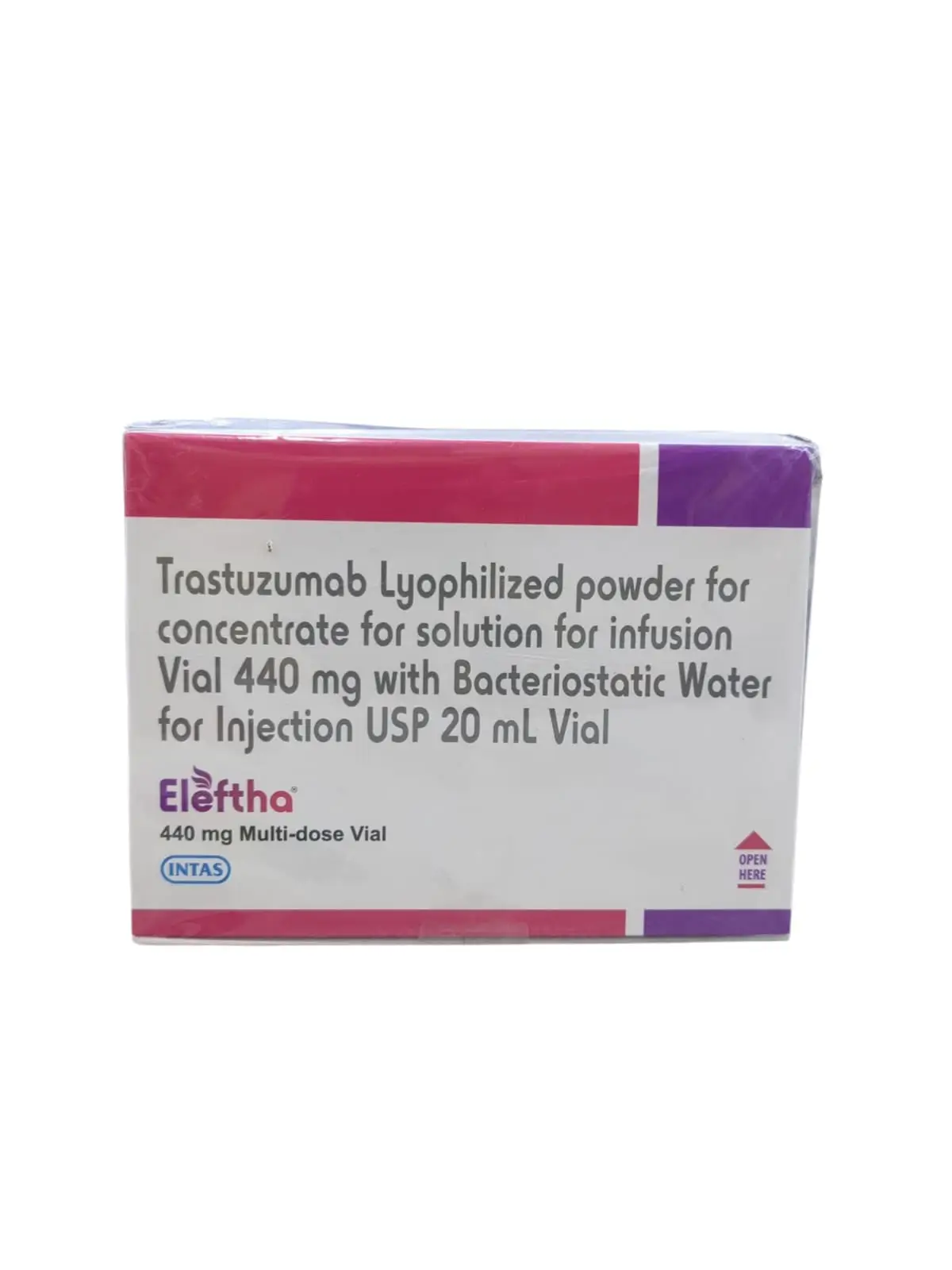
Eleftha 440mg (Trastuzumab)
Previous product
Lenvima 10mg (Lenvatinib)
A$594.93 A$1,675.04Price range: A$594.93 through A$1,675.04
Next product
Lenvima 4mg (Lenvatinib)
A$236.82 A$618.03Price range: A$236.82 through A$618.03
A$447.64 A$2,180.44Price range: A$447.64 through A$2,180.44
In Stock
In Stock
Eleftha 440mg (Trastuzumab)
| Pack Size | Price | Quantity | Add To Cart | |
|---|---|---|---|---|
| 1 Injection/s | A$447.64 | |||
| 3 Injection/s | A$1,208.63 | |||
| 6 Injection/s | A$2,180.44 | |||
| Want to order in bulk / B2B price? Send Inquiry | ||||
×
Sorry!! Out of Stock
Sorry! Eleftha 440mg (Trastuzumab) is out of stock
Please click below to view other similar medications.
View All Trastuzumab Products
Offer You Can't Resist
Free Shipping
Enjoy Free Shipping on Orders above AUD304 (USD199)
Estimate Shipping :
24 July - 31 July
20
Last Updated on December 01, 2025

Description
Eleftha 440mg with Trastuzumab is a monoclonal treatment used primarily for the treatment of breast cancer that is HER2-positive, as well as metastatic gastric cancer that is HER2-positive. Made as a biosimilar of Herceptin’s original formulation, Eleftha, it is a cost-effective, superior treatment option that has improved outcomes for those whose tumors express the HER2 protein.
Trastuzumab has revolutionized the treatment of oncology because it targets cancer cells while not affecting normal tissues. This blog focuses on Eleftha’s therapeutic use, the mechanisms of action, dose, adverse effects, as well as crucial considerations for patients as well as healthcare professionals.
What Is Eleftha 440mg (Trastuzumab)?
Eleftha 440mg, is a biosimilar form of Trastuzumab, an individualized monoclonal therapy for the treatment of autoimmune diseases. It’s made using Recombinant DNA technology. It has been designed to target the human epidermal growth factor receptor 2 (HER2).
The protein HER2 can be found at high levels in the outer layer of some cancerous cells, especially in the breast as well as gastric cancer. The overexpression of HER2 can be associated with a more aggressive form of cancer and worse prospects of survival. Trastuzumab is effective by inhibiting the function of HER2 and activating immune-mediated destruction of cancerous cells.
Key Indications: Who Needs Eleftha?
Eleftha 440mg has been prescribed for people suffering from cancers that are HER2-positive, which are confirmed via laboratory tests like IHC (IHC) or fluorescence in situ hybridization (FISH).
It is indicated in:
- Early-stage breast cancer, HER2-positive, in conjunction with adjuvant (post-surgery) treatment
- Metastatic HER2-positive breast cancer
- HER2-positive metastatic gastric or gastroesophageal junction adenocarcinoma
Patient Selection:
Patients with tumors that exceed HER2 (IHC 3+, or FISH positive) can be treated using Eleftha. A HER2 test is essential before beginning treatment.
How Does Trastuzumab Work?
Trastuzumab is monoclonal antibodies that target the extracellular domain of the HER2 receptor in cancerous cells. It functions through a variety of methods:
- Receptor Blockade: Protects against HER2 activation as well as downstream signaling. This stops cell division.
- Antibody-Dependent Cellular Cytotoxicity (ADCC): It triggers immune cells to attack and eliminate HER2-positive tumor cells.
- Inhibition of Angiogenesis: Restricts blood flow to tumors.
- Sensitization to Chemotherapy: Improves the effect of various cancer medications.
By utilizing this multimodal approach, Trastuzumab improves survival, decreases tumor growth, and decreases the chance of recurrence.
Dosage and Administration of Eleftha 440mg
Eleftha is given intravenously (IV) and is administered in two stages: a loading dose, which is followed by regular doses.
For Breast Cancer (Adjuvant or Metastatic):
- Loading dose: 8 mg/kg IV infusion over 90 minutes (Day 1)
- Maintenance dose: 6 mg/kg IV once every three weeks, administered over 30 to 90 minutes, based on the degree of tolerance
For Gastric Cancer:
- Loading dose: 8 mg/kg IV infusion
- Maintenance: 6 mg/kg every 3 weeks until disease progression
Preparation:
Eleftha 440mg comes in the form of it is a liquid lyophilized powder to be reconstituted and diluted before IV infusion. It should be prepared by a medical professional in strict conditions for aseptic preparation.
Important: Trastuzumab is not recommended in a rapid push or Bolus. Monitoring closely during and following an infusion is vital because of the possibility of hypersensitivity or reaction to the infusion.
Duration of Therapy
- If you have women with early breast cancer, Treatment is usually extended for one year or until the disease has recurred.
- In the cases of metastatic cancer, treatment continues until the disease progresses or toxicity is unacceptable.
Effectiveness of Trastuzumab
Studies in clinical trials as well as real-world ones have confirmed the efficacy of Trastuzumab to significantly improve the survival rate:
- Reduces the risk of recurrence of up to 50% in breast cancer that is early stage.
- Increases progression-free as well as overall life expectancy in cancers that are metastatic and HER2-positive
- Increases the effectiveness of chemotherapy as well as other targeted therapies
The advent of biosimilars, such as Eleftha, has made this life-enhancing treatment easier to access without any compromise in effectiveness or security.
Common Side Effects of Eleftha (Trastuzumab)
Although generally tolerated, Eleftha can cause side reactions, and some might require medical attention.
Common Side Effects:
- Fever or chills
- Fatigue
- Nausea or vomiting
- Headache
- Diarrhea
- Rash
- Infusion-related reactions (flushing, shortness of breath, hypotension)
Serious Side Effects:
- Cardiotoxicity: Reducing left ventricular ejection (LVEF) and congestive heart malfunction
- Pulmonary toxicity: Interstitial lung disease, pneumonitis (rare)
- Anaphylaxis or severe hypersensitivity reactions
- Myelosuppression (when combined with chemotherapy)
Monitoring your heart regularly is vital because of the danger of heart insufficiency, especially for older patients and those suffering from existing cardiac problems.
Warnings and Precautions
Before beginning Eleftha, the following safety steps should be taken:
- Baseline cardiac evaluation (echocardiogram or MUGA scan) is required
- Do not combine in combination with anthracyclines (e.g., doxorubicin) because of an increased risk of cardiovascular risk
- Check LEF at least every three months throughout treatment
- Caution in patients with existing heart disease, hypertension, or prior chest radiation
If LVEF decreases significantly, or if symptoms of heart disease develop, the treatment should be stopped or stopped.
Contraindications
Eleftha should not be used in:
- Patients suffering from previously identified hypersensitivity to Trastuzumab or its excipients
- Patients who suffer from extreme dyspnea or anoxia dependence caused by lung metastases
Use in Pregnancy and Lactation
Trastuzumab is classed as Pregnancy Category D:
- Can cause fetal harm including oligohydramnios, fetal renal dysfunction, and neonatal death
- The most effective contraception is essential throughout treatment, and up to seven months following the dose that was last administered.
- It is not advised to breastfeed in the first and subsequent months following therapy.
Women who are pregnant must discuss alternative options or postpone therapy until after the birth, based on their stage and the urgency of treatment.
Drug Interactions
Trastuzumab is typically not associated with important drug-drug interactions; however, it is recommended to exercise caution when using it together with:
- Anthracyclines (e.g., doxorubicin): additive cardiotoxicity
- Radiation therapy: May increase the risk of pulmonary toxicity
- Other monoclonal antibodies or immunotherapies: Risk of immune-mediated effects
Monitoring During Treatment
Exams and follow-up testing are essential for Eleftha treatment:
- Cardiac assessment (echocardiography or MUGA) every 3 months
- CBC and liver function tests
- HER2 status confirmation before initiation
- Be on the lookout for reaction to infusion, particularly during the initial doses
Accessibility and Affordability: Biosimilar Advantage
A biosimilar Eleftha 440mg offers the same benefits in clinical terms as the primary biologic (Herceptin), however, at a much lower price. Biosimilars have been rigorously evaluated to determine:
- Pharmaceutical equivalence
- Clinical similarity
- Safety and immunogenicity
This creates Eleftha an ideal choice, especially in nations where accessibility and affordability are key concerns.
Summary: Eleftha 440mg at a Glance
| Feature | Details |
| Brand Name | Eleftha 440mg |
| Active Ingredient | Trastuzumab |
| Drug Class | Monoclonal Antibody (Anti-HER2) |
| Indications | HER2+ Breast & Gastric Cancer |
| Route of Administration | Intravenous (IV) Infusion |
| Dosing Schedule | Every 3 weeks after loading dose |
| Side Effects | Fever, nausea, heart dysfunction |
| Major Risks | Cardiotoxicity, hypersensitivity |
| Monitoring Required | LVEF, cardiac status, infusion reactions |
| Pregnancy Category | D (Contraindicated) |
Final Thoughts
Eleftha 440mg (Trastuzumab) is a key treatment in the management of HER2-positive tumors. They provide an effective, targeted treatment with demonstrated survival benefits. Because it’s a biosimilar drug to Herceptin, it opens access to top-quality treatment for those in need.
Effective treatment for Eleftha requires the careful selection of patients as well as HER2 testing on a regular basis, monitoring, and transparent communications between patients and their medical teams. Though there may be some adverse effects but they’re generally manageable in the event that therapy is appropriately monitored.
Related products




Reviews
There are no reviews yet.